0
0

In many homes in Singapore, space is becoming more compact. Whether it is a new BTO flat, a studio unit, or a downsized living arrangement, homeowners are learning to make the most of every square metre. While smaller homes can be easier to maintain, they also require more careful planning when it comes to everyday essentials like cooling.
When choosing an aircon for a small house, it’s important to ensure that the system works efficiently within that environment. In a compact layout, airflow patterns, heat buildup, and even furniture placement can influence how well your home stays cool throughout the day.
In this guide to aircon sizing, we break down how to choose the right system for your space so you can stay cool comfortably and efficiently.
When choosing an aircon, most people tend to focus on the brand or price. In contrast, the size of the air conditioner (or your home) does not always get the same attention. This might not cause obvious issues in larger spaces, but in smaller homes, this can lead to:
Over time, these issues become more noticeable. You may end up paying more on your electricity bills while still dealing with a space that feels less comfortable than it should.
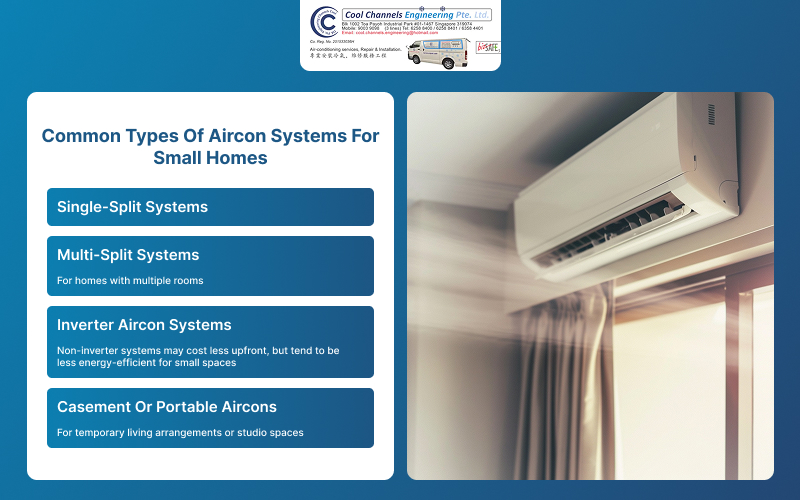
Different system types offer varying levels of flexibility and efficiency. Here are some of the most common types of aircon for small houses, each suited to different layouts and usage needs.
Single-split aircon systems are designed to cool one room at a time, making them a practical choice for smaller homes with focused cooling needs. They are generally more straightforward in terms of setup and tend to be more cost-effective upfront. For example, if you mainly use air-conditioning in the bedroom at night, a single-split system allows you to cool just that space without running a larger system. This can help reduce unnecessary energy usage while keeping aircon installation simple.
In Singapore, multi-split systems are commonly used for both small and large homes alike. These work by connecting several indoor units to a single outdoor compressor, allowing you to cool different rooms independently. In this way, multi-split systems offer more flexibility, as you can switch on only the rooms in use instead of cooling the entire home. It is a practical solution for households where usage varies throughout the day, such as cooling the living room in the evening and bedrooms at night.
Inverter and non-inverter systems differ mainly in how they regulate cooling. An inverter aircon adjusts its compressor speed based on the room’s temperature, allowing it to maintain a steady level of cooling without constantly turning on and off. A non-inverter system, on the other hand, operates at a fixed speed, switching on when cooling is needed and off once the desired temperature is reached.
For small houses, inverter aircon systems are generally more suitable. They provide more consistent temperatures, better humidity control, and improved energy efficiency, especially in spaces that cool quickly. Non-inverter systems may have a lower upfront cost, but their frequent cycling can lead to higher electricity usage and less stable comfort over time.
For very small or unconventional spaces, such as studio units, rental rooms, or areas where fixed installation is not possible, alternative options like casement or portable aircons can be considered. These units are generally easier to set up and require less commitment, which makes them suitable cooling solutions for small spaces and temporary living arrangements. However, they often have lower cooling capacity and may not be as energy-efficient as split systems. While they can work as short-term or flexible solutions, homeowners should weigh convenience against long-term performance and comfort.
When choosing an aircon for a small house, it’s important to evaluate its cooling capacity. BTU, or British Thermal Unit, measures how much heat an aircon can remove from a room. In smaller homes, getting this right makes a noticeable difference. A unit that is too powerful may cool too quickly without maintaining comfort, while one that is too weak may struggle to keep up, especially during warmer parts of the day.
To estimate the required BTU, use your room’s floor area as a starting point.
This gives you a general range that accounts for typical conditions in Singapore and provides a useful baseline when comparing different aircon models for a small house. From here, you can fine-tune your selection depending on factors such as sunlight exposure or how often the room is used.
While the basic formula is helpful, real-world conditions often influence how much cooling power your space actually needs. These factors can have a stronger impact when choosing an aircon for a small house, as there is less room for variation.
By considering these factors alongside the basic calculation, homeowners can choose an aircon system that is better suited for small houses. This leads to more consistent cooling, improved comfort, and more efficient energy use over time.
When choosing an aircon system for a small house, homeowners should also consider how well it fits within the available space and overall layout.
Slim and compact indoor aircon units are better suited for small houses where wall space is limited. In tighter layouts, bulky units can feel visually heavy and may restrict how furniture is arranged. Choosing a more streamlined design helps the unit blend into the room, allowing the space to feel open and uncluttered.
Look for units that can be installed above door frames or along less-used wall areas. This helps free up space for storage or décor while keeping the unit out of your main line of sight. It is also helpful to plan your furniture layout first, so you can ensure the aircon placement does not interfere with wardrobes, shelving, or wall-mounted fixtures.
Position your aircon unit where airflow can move freely across the space, without being blocked by wardrobes, partitions, or large furniture. In smaller homes, even minor obstructions can disrupt airflow and lead to uneven cooling.
In one-room apartments or studio layouts, it helps to place the unit along a central wall where it can cover both the sleeping and living areas. For example, installing it opposite the bed or main seating area allows cool air to circulate more evenly across the entire space. If space is tight, adjusting the louvre direction can help guide airflow across different zones.
For small houses, a noisy aircon unit can be particularly disruptive. Sound tends to travel more easily in compact spaces where rooms are closer together or serve multiple functions.
When comparing models, check the noise level rating, especially for indoor units used in bedrooms. You can also position the unit slightly away from the bed or desk to reduce direct noise exposure. If possible, opt for models with “quiet” or “sleep” modes, which can help to lower operating noise at night.
Homeowners with smaller spaces may be concerned about the space needed for professional aircon installation services or even servicing further down the line. Here’s what you need to take note of.
Before installation, it helps to map out where key furniture such as beds, wardrobes, and shelving will go. This ensures the indoor unit is placed where airflow is not blocked and where it will not interfere with storage or movement.
For example, in bedrooms with built-in wardrobes, placing the unit too close to the wardrobe can restrict airflow and make servicing difficult. In living areas, avoid positioning the unit directly above shelving or feature walls where access may be limited. Thinking through these details early helps prevent awkward placements that are hard to fix later.
Engaging a reliable aircon contractor is especially important in smaller homes, where installation needs to be precise. In addition to installing the unit, a good contractor will also assess your layout, recommend a suitable system, and plan the piping in a way that works with your space. If trunking is visible along the walls, your contractor will also plan the routing carefully so it stays neat and aligned with the room, rather than cutting across key areas or disrupting the overall layout.
Aircon servicing can become more complicated if planning is overlooked from the start. For small houses, aircon units installed too close to ceilings, corners, or built-in furniture can be harder to access, making routine maintenance more time-consuming and potentially more costly.
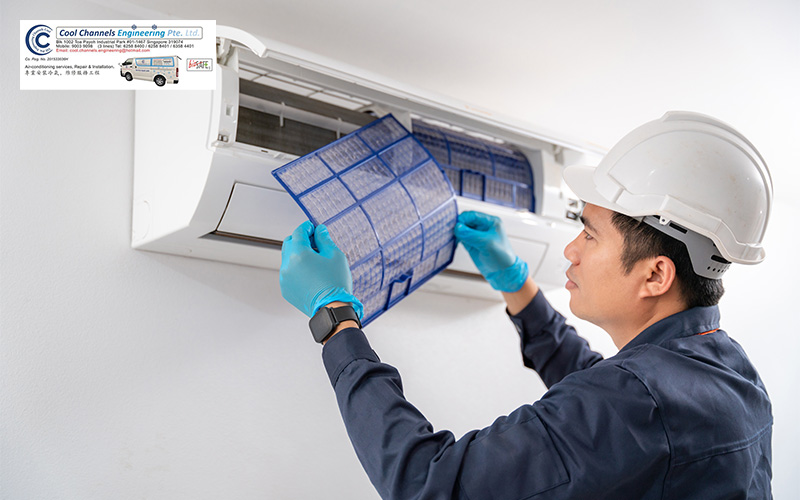
Where possible, leave enough clearance around the unit to allow easy access. This makes it simpler for technicians to remove panels, clean filters, and inspect components without having to shift furniture or dismantle surrounding fixtures.
For most households, servicing every 3 to 4 months is recommended, especially with frequent use. For aircon units in small houses, the exact frequency depends on how often the system is used and how enclosed the space is. In compact homes where aircon is used daily, dust and moisture can build up more quickly, so regular aircon maintenance helps maintain airflow, cooling efficiency, and overall comfort.
For most small rooms, setting your aircon to around 24 to 25°C is sufficient. Smaller spaces cool faster, so lowering the temperature too much can lead to overcooling without improving comfort.
In many studio or one-room layouts, a single unit can be enough if it is properly sized and positioned. When installing an aircon for small houses, ensure that the airflow is not blocked by furniture or partitions. This helps distribute cool air more evenly across the space.
This is often due to poor humidity control or uneven airflow. It can happen when the unit is oversized or placed incorrectly. These issues are more noticeable for aircon units in small houses, so proper sizing and placement are important.
Choosing the right aircon for a small house comes down to more than just picking a compact unit. From selecting the right system type and capacity to planning proper placement and installation, each decision plays a role in how comfortable and efficient your home feels on a daily basis.
If you are unsure where to start, engaging a professional can make the process much easier. At Cool Channels Engineering, our team provides reliable guidance, from system selection to installation and servicing. Whether you are setting up a new unit or improving an existing one, get a free consultation today and find a solution that fits your home.