0
0

Singapore’s tropical humidity makes air conditioning almost essential. From HDB flats to condominiums and landed homes, many residents rely on their aircons daily (and often overnight) to stay comfortable. Yet, as energy costs rise, homeowners are increasingly looking for ways to stay cool without overspending on utilities.
That’s where energy-efficient aircon systems in Singapore come in. Marketed as efficient, eco-friendly, and technologically advanced, these systems promise consistent comfort with lower energy use. But what makes an aircon “energy-saving”, and how can you maximise its efficiency in your home?
In this guide, we’ll break down how to save electricity with your aircon by looking for the right energy-saving features, avoiding common pitfalls, and applying simple usage habits.

The difference between a standard air conditioner and an energy-saving aircon comes down to advanced engineering that minimises wasted power. Here are the core technologies and features to look for:
Inverter technology is at the core of every energy-saving aircon system. Traditional compressors switch on and off repeatedly, consuming bursts of electricity each time they restart. In contrast, inverter compressors automatically adjust their speed to maintain a steady temperature. By avoiding these constant stop-start cycles, inverter aircons consume 30–40% less energy than non-inverter models.
Energy-saving systems also include adaptive modes such as Eco and Sleep Mode. Eco Mode moderates compressor performance during mild weather, while Sleep Mode gradually adjusts temperature through the night to prevent overcooling. For instance, if your aircon starts at 24°C at bedtime, Sleep Mode may automatically raise it to 26°C over several hours, saving energy while keeping you comfortable.
The refrigerant circulating inside your air conditioner determines how efficiently heat is absorbed and released. Newer systems typically use refrigerants like R32, which not only cool more efficiently but also have a significantly lower Global Warming Potential (GWP) compared to older options, like R22 or R410A. Choosing a model with a greener refrigerant contributes to both your wallet and Singapore’s broader sustainability goals.
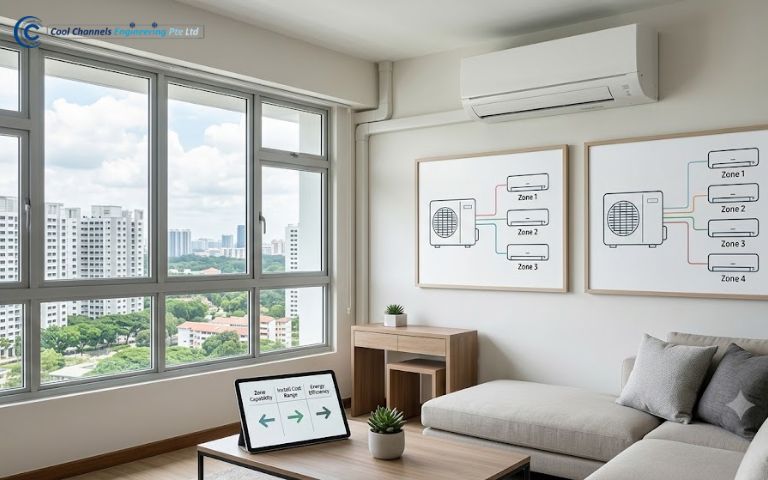
Some energy-saving aircon models incorporate motion sensors and zone-based thermostats. These detect occupancy and automatically reduce cooling in empty spaces, optimising performance without wasting electricity. Paired with mobile app controls or smart home systems, homeowners can fine-tune temperature settings remotely. It’s a great feature for households where everyone comes and goes at different times.
The National Environment Agency’s (NEA) aircon rating system in Singapore helps consumers identify efficient models at a glance. Systems are graded from two to five ticks, with five-tick units being the most energy-saving. A five-tick rating typically indicates advanced inverter design, superior refrigerant efficiency, and better insulation across components.
That said, you should still consider both the rating and the unit’s cooling capacity. A high-rated but undersized unit may still waste energy if it’s constantly running at full power to cool a large room.

Beyond the technical specifications, what does choosing an energy-saving aircon unit actually mean for the average Singaporean household?
In Singapore, air conditioning alone accounts for about 24% of an average household’s electricity consumption. Since energy-saving aircon units consume less power, they can help you save noticeably on monthly utilities. Over a system’s 10-year lifespan, these energy savings can easily offset the initial investment cost. So, while inverter models may cost slightly more initially, their lower running costs can quickly make up the difference depending on room size and frequency of use.
Energy efficiency naturally leads to a smaller carbon footprint. By consuming less electricity and using eco-friendly refrigerants, energy-saving aircon systems help households play their part in Singapore’s sustainability efforts. Under the Singapore Green Plan 2030, for instance, one of the key targets is to reduce energy consumption in existing HDB towns by 15%. This allows environmentally conscious homeowners to strike the perfect balance between everyday comfort and environmental responsibility.
An energy-saving aircon operates more smoothly and efficiently, reducing the mechanical stress placed on key components such as the compressor and fan motor. This not only minimises wear and tear but also lowers the likelihood of sudden malfunctions or costly emergency repairs. Over time, the system’s optimised performance translates into lower servicing costs and a noticeably longer lifespan.
However, it’s important to recognise that even the most advanced energy-saving aircon systems can fail to deliver if key factors are ignored. Here are some common pitfalls you should avoid and key aircon maintenance tips to consider:
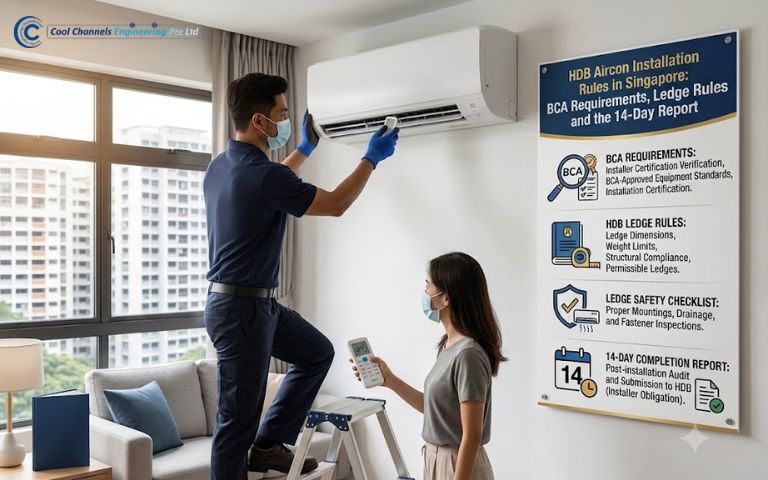
Every home’s cooling requirement is different. A 9,000 BTU unit might work for a small bedroom, but struggle in an open-plan living area. On the other hand, an oversized unit cools too quickly, leading to uneven temperatures and wasted power. Consulting a qualified technician for professional aircon installation ensures your system is properly matched to your space.
An energy-saving aircon unit can only be as efficient as the user allows it to be. For instance, leaving the unit on in an empty room or setting the temperature too low forces the system to work harder than necessary, wasting both energy and money. It’s also best to avoid burning incense or using fragrance sticks while your aircon is running, as airborne particles and oils can clog filters, coat coils, and degrade internal components over time.
Improper installation can negatively affect efficiency regardless of the unit’s features. Errors such as incorrect refrigerant piping, poor insulation around copper lines, or improper placement of indoor and outdoor units can lead to significant efficiency loss. Avoid these issues by relying on a trusted professional like Cool Channels Engineering for expert installation.

Investing in an energy-saving aircon is only the first step toward reducing your household’s electricity use. To truly maximise its efficiency, you’ll need to complement advanced technology with proper care, maintenance, and smart daily habits.

Each time your aircon runs, it draws in tiny airborne particles such as dust, lint, and cooking vapour. Over time, these settle on the filters, evaporator coils, and fan blower, gradually restricting airflow and reducing cooling efficiency. When this happens, your unit needs to work harder to maintain the same temperature, leading to higher power consumption and unnecessary strain on the system.
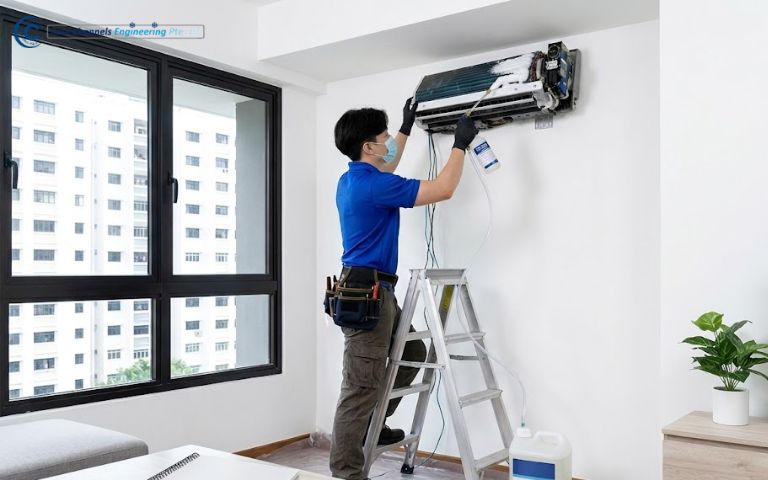
Regular professional cleaning can help keep your energy-saving aircon running efficiently and prevent unnecessary strain. For a deeper clean, consider aircon chemical cleaning, which removes stubborn dirt and microbial buildup from internal parts to restore smooth airflow and strong, consistent cooling.
A well-maintained unit can last 10 to 15 years or longer, while a neglected one may struggle to reach even half that. Routine servicing allows technicians to detect early signs of trouble, such as refrigerant leaks, loose wiring, or worn components, before they escalate into costly repairs or full system breakdowns. By taking a proactive approach, you can not only prolong the life of your air conditioner but also save yourself from the inconvenience of sudden failures during Singapore’s hottest days.
Even minor issues, such as low refrigerant or dirty coils, can cause your unit to overwork. When the system has to draw more power to achieve the same cooling, its energy-saving advantage is lost. Professional tune-ups include recalibrating your system, cleaning coils, and checking refrigerant pressure, helping it operate at its designed efficiency level.
Beyond cooling, your aircon also plays a vital role in indoor air quality. In Singapore’s humid climate, moisture can encourage the growth of bacteria and mould inside the unit. These microorganisms are then circulated back into your living space. Regular cleaning eliminates allergens, pet dander, and microbial buildup, making your home safer, fresher, and healthier, especially for families with young children or elderly members.
To make maintenance worry-free, consider an aircon servicing contract from Cool Channels Engineering, which guarantees regular check-ups and consistent care without the hassle of manual scheduling.

Beyond servicing and cleaning, small changes in how you use your energy-saving aircon can make a big difference. These simple yet effective habits help you maximise comfort while keeping your electricity bills low.
Running a ceiling fan alongside your air conditioner helps circulate cool air more evenly throughout the room. With better air movement, you can raise your thermostat setting slightly (for instance, 25°C instead of 23°C) and still feel just as comfortable. According to the NEA, every degree higher can save households about $13 a year in electricity costs.
Cool air escapes easily through small gaps, and warm, humid air from outside quickly replaces it. To maintain consistent cooling, close all windows and doors tightly while the air conditioner is running. Use weather stripping or draft stoppers for added insulation, and draw curtains or blinds during the day to reduce solar heat gain, especially for west-facing rooms that are exposed to afternoon sun.
If the weather isn’t too hot, try running your energy-saving aircon for about 30 to 60 minutes to cool the room. Once the temperature feels comfortable, switch to a fan to maintain airflow and circulation. This method significantly cuts down on electricity use while keeping your living space pleasant, especially during cooler evenings or rainy days.
Another simple yet effective habit is to use your air conditioner’s timer function. Set it to turn off about 30 minutes before you usually wake up or leave the room. The residual cool air will keep the space comfortable while reducing unnecessary runtime. Over time, this routine helps extend your system’s lifespan and contributes to lower energy bills.
You can clean some parts of your aircon yourself, such as the outer vents and removable filters. Rinsing the filters under running water every 2–4 weeks helps maintain airflow and cooling efficiency. However, deeper cleaning, like clearing the drainage pipe or removing internal mould, should be left to professionals to avoid damaging components or voiding warranties.
Not necessarily, as long as you use your aircon’s energy-saving settings wisely. Most modern systems feature a Sleep Mode that gradually adjusts the temperature through the night, keeping you comfortable while minimising energy use. You can also use a timer to turn off the unit automatically after a few hours. This ensures restful sleep without excessive electricity consumption.
If your aircon isn’t cooling as effectively as before, start by checking the filters for dust buildup and ensuring all windows and doors are sealed. If the issue persists, it may indicate a deeper problem, such as a refrigerant leak, dirty coils, or compressor fault. In such cases, schedule professional aircon troubleshooting to accurately diagnose and fix the issue before it worsens.
Choosing an energy-saving aircon is one of the most effective ways to stay comfortable in Singapore’s tropical climate while managing electricity costs and reducing your carbon footprint. But achieving true efficiency isn’t only about the label on the box—it’s about how you install, use, and maintain the system.
Whether you’re planning a new installation, exploring maintenance packages, or simply looking for expert advice, Cool Channels Engineering is here to help. With more than 15 years of industry experience, we provide professional air conditioning service and repair solutions across residential and commercial settings.
Get in touch with us today.