0
0
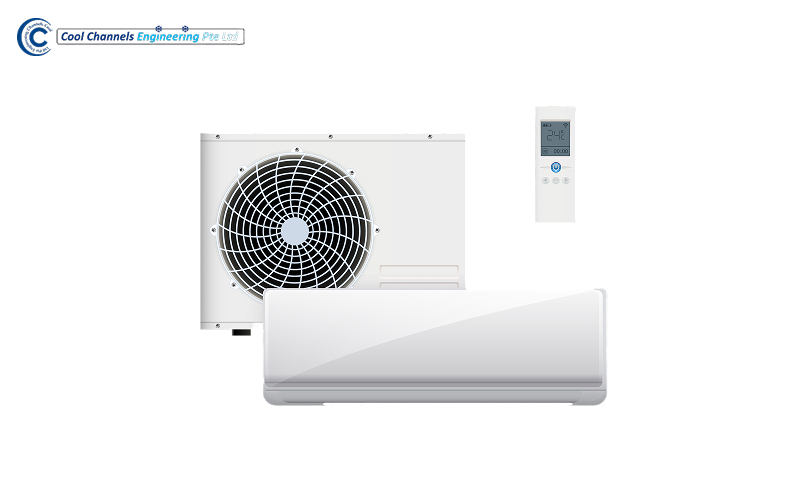
A blinking light or unfamiliar code can make it difficult to tell whether your Mitsubishi aircon needs a reset or professional attention. Error indicators help narrow down the affected component, but their meanings can vary by model and product series.
This Mitsubishi aircon troubleshooting guide covers common Mitsubishi Electric error codes, blinking-light patterns, and checks you can safely perform before calling a technician.
Your aircon monitors conditions such as temperature, airflow, drainage, communication between units, and electrical current. When it detects an abnormal reading, it may stop operating and display a code or blinking-light pattern.
This protects the system when a component may be blocked, disconnected, overheating, or malfunctioning. However, an error code is only a diagnostic starting point. A communication error, for example, could come from loose wiring, electrical interference, or a faulty circuit board.
Our aircon troubleshooting services can help identify whether the fault comes from the indoor unit, outdoor unit, controller, drainage system, or refrigerant circuit.
Mitsubishi Electric and Mitsubishi Heavy Industries are separate brands, so their error codes are not interchangeable. Diagnostic methods may also differ between Starmex, Mr Slim, City Multi, and other systems.
The first step to Mitsubishi aircon troubleshooting is to find the model number on the indoor or outdoor unit label. It may begin with MSY, MUY, MXY, PLY, PEY, or PUY. Check the manual for your exact model before treating any code as definitive.
| Code | Possible Issue | What It May Mean |
| P1 | Intake air thermistor | The indoor temperature sensor or connection may be faulty. |
| P2 | Indoor pipe thermistor | A pipe sensor, connector, or wire may be damaged. |
| P4 | Drain sensor | The sensor or its circuit may have developed a fault. |
| P5 | Drain pump or overflow | The drain may be blocked, or the pump may be faulty. |
| P6 | Freezing or overheating protection | Restricted airflow, dirty filters, or refrigerant issues may affect the coil. |
| P8 | Pipe temperature error | The expected pipe temperature change was not detected. |
| P9 | Indoor coil thermistor | The heat-exchanger sensor or wiring may be faulty. |
| PB | Indoor fan motor | The motor, connector, or fan control circuit may be affected. |
| FB | Indoor control system | The circuit board or stored control data may be abnormal. |
| PL | Refrigerant circuit | Leakage, restriction, or poor refrigerant circulation may be present. |
Switch off the unit if water is leaking, the fan makes grinding noises, or the same code returns after a reset. Do not dismantle the casing to inspect sensors or wiring.
| Code | Possible Issue |
| E0 or E3 | Transmission fault between a wired controller and indoor unit |
| E1 or E2 | Remote-controller board or setting fault |
| E4 or E5 | Communication problem between the controller and indoor unit |
| E6 or E7 | Communication problem between the indoor and outdoor units |
| E8 or E9 | Serial communication fault within certain systems |
These errors may result from loose wiring, damaged cables, interrupted power, electrical interference, or a faulty circuit board. If the code returns after one reset, arrange professional testing.
| Code | Possible Issue | What It May Mean |
| U1 | Abnormally high pressure | Restricted airflow, dirty components, a closed valve, or refrigerant conditions may be responsible. |
| U2 or U7 | Discharge temperature abnormality | Low refrigerant, a restriction, or a faulty thermistor may be involved. |
| U3 or U4 | Outdoor thermistor fault | One or more outdoor temperature sensors may be faulty. |
| U6 | Compressor overcurrent | The compressor, inverter, power supply, or wiring may be abnormal. |
| U8 or Ud | Outdoor fan motor | The fan motor or control circuit may not be operating correctly. |
| UE | Stop valve or refrigerant flow | A closed valve or restricted circulation may be present. |
| UP | Compressor overcurrent interruption | A compressor, wiring, power, or inverter-board fault may have stopped operation. |
Do not repeatedly restart the system when compressor or overcurrent codes appear, as this may place further strain on the equipment.
For faults involving the compressor, fan motor, circuit board, or refrigerant system, our technicians can assess whether targeted aircon repair in Singapore is required.
Some Mitsubishi Starmex models use blinking lights instead of written codes. Record:
One affected fan coil may indicate a local indoor-unit fault. If several units connected to the same condenser stop together, the issue may involve the shared outdoor unit or communication system.
Do not open the outdoor unit to inspect circuit-board lights. Give the technician the visible pattern and model number instead.
For model-specific manuals and diagnostic charts, refer to Mitsubishi Electric Singapore, as error codes and blinking patterns vary across Starmex and Mr Slim systems.
A reset may help after a power interruption or temporary communication error:
Some remotes also have a reset button, although its function varies by model. A reset will not repair a faulty sensor, blocked drain, damaged fan motor, refrigerant leak, or compressor problem.
Before arranging professional Mitsubishi aircon troubleshooting, check whether the circuit breaker has tripped, the remote batteries need replacing, the filters are clogged, airflow is obstructed, or water is leaking. Record the model number, error code, and blinking pattern.
Stop using the unit if the error returns after a reset, the breaker repeatedly trips, several units stop cooling, or you notice loud noises, water near electrical parts, smoke, sparks, or a burning smell.
Weak cooling may result from dirty filters, clogged coils, poor airflow, fan problems, low refrigerant, inaccurate sensors, or compressor faults.
Proper Mitsubishi aircon troubleshooting considers the reported code together with temperatures, pressure readings, electrical measurements, airflow, and component condition. Replacing parts or adding refrigerant without confirming the cause may leave the original fault unresolved.
With professional aircon servicing and repair, Cool Channels can inspect the system, explain the likely cause, and recommend work based on the unit’s actual condition.
Error codes can help identify whether a fault involves the indoor unit, outdoor unit, controller, drainage system, sensor, or refrigerant circuit. However, their meanings may differ across models.
Record the model number, code, and blinking pattern before performing basic checks or one controlled reset. When the warning returns or points to an internal component, professional Mitsubishi aircon troubleshooting offers a safer and more accurate way to determine the repair required.
Contact us for professional diagnosis if the code returns after a reset or you are unsure what it means. Our technicians can identify the cause and recommend the appropriate repair.