0
0

Key Takeaways
|
Ever wondered what happens inside your air conditioner when you press that power button? Beneath the sleek exterior lies a complex system of mechanical and electrical aircon components that work together to keep your room cool and comfortable. Each part plays a crucial role in ensuring efficient operation and balanced airflow.
Here’s a closer look at the key parts of an aircon unit and how they work together to deliver consistent, refreshing air throughout your space.
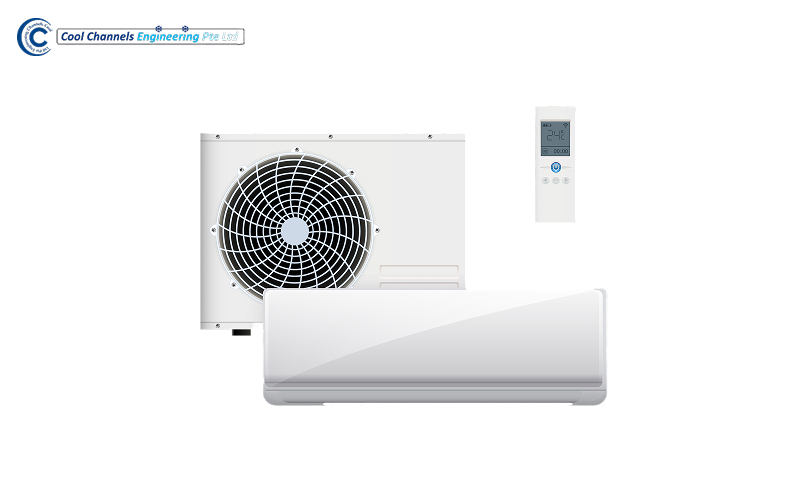
The compressor is often called the heart of your aircon system, and for good reason. It’s responsible for circulating and pressurising the refrigerant gas, which carries heat between the indoor and outdoor units. When the refrigerant enters the compressor as a low-pressure gas, it’s compressed into a high-pressure, high-temperature state before being sent to the condenser coil. There, the heat is released outdoors, allowing the refrigerant to cool down and return to the indoor unit to absorb more heat.
This continuous cycle of compression and heat exchange is what keeps your air cool and consistent. If the compressor fails, your aircon won’t be able to cool at all. As such, it’s one of the most vital parts of an air conditioning unit and needs to be maintained through regular servicing.

The evaporator coil is one of the most essential parts of an aircon, located inside the indoor unit. Its primary function is to absorb heat from the air in your room. As warm air passes over the coil, the refrigerant inside evaporates and draws heat away, allowing the system to release cool, refreshing air back into your space.
However, over time, dust and grime can accumulate on the coil’s surface, forming a barrier that prevents efficient heat absorption. When this happens, your air conditioner has to work harder to maintain the desired temperature, which increases energy consumption and may even cause the coil to freeze. Regular aircon cleaning helps maintain optimal cooling performance, prolongs your system’s lifespan, and keeps your indoor air fresh and comfortable.
The fan motor is responsible for moving air through the system. Inside the indoor unit, it blows air over the evaporator coil, distributing the cooled air evenly throughout your space. Meanwhile, the outdoor fan motor helps release the absorbed heat into the environment.
When the fan motor slows down, you may notice weak airflow or uneven cooling. Regular aircon service keeps the motor clean, lubricated, and well-balanced, ensuring your system performs efficiently while maintaining quiet operation.
The PCB, or Printed Circuit Board, acts as the “brain” of your air conditioning system. It controls and coordinates key operations such as temperature regulation, compressor activation, and fan speed. It also processes signals from the thermostat and remote control, ensuring that your aircon responds accurately to every setting you choose.
Since it handles all electrical functions, the PCB is one of the more delicate parts of an aircon. A faulty board can cause the system to shut down unexpectedly or fail to respond to remote commands. When issues arise, professional technicians can inspect the PCB and replace it with genuine aircon spare parts to restore proper operation.

The thermostat and control panel are your main interfaces with the aircon system, allowing you to set the temperature, mode, and fan speed according to your comfort. Once you’ve made your selection, the thermostat sends signals to the PCB, which adjusts the compressor and fan operation to match your desired settings.
Faulty sensors or miscalibrated thermostats can lead to inconsistent cooling or excessive energy use. Regular calibration and professional checks will help ensure accurate temperature control and energy efficiency.
Now that you understand the main parts of an aircon, it’s easier to see why regular maintenance is so important. Each component, from the fan motor to the compressor, plays a crucial role in keeping your home cool and comfortable.
If you ever need replacements or maintenance, rely on trusted professionals like Cool Channels Engineering. Whether it’s diagnosing a faulty PCB or sourcing genuine Mitsubishi aircon spare parts, our team is here to ensure lasting comfort and peace of mind.
Contact us today to schedule a consultation or learn more about maintaining the health of your air conditioning system.