0
0

In Singapore, most of us rely on air conditioning to keep cool. When your unit suddenly breaks down, you feel the heat almost immediately, and your home quickly becomes uncomfortable, especially if it happens at night or during a hot afternoon. It can be frustrating not knowing what caused the issue, how serious it is, or whether you need immediate help.
Below, we’ll walk you through what counts as an emergency, what you should do right away, and how to handle emergency aircon repair.
Not every aircon issue needs immediate attention. Some problems can wait for a scheduled repair, especially if the unit is still running safely. However, there are situations where delaying action can lead to property damage, higher repair costs, or even safety risks.
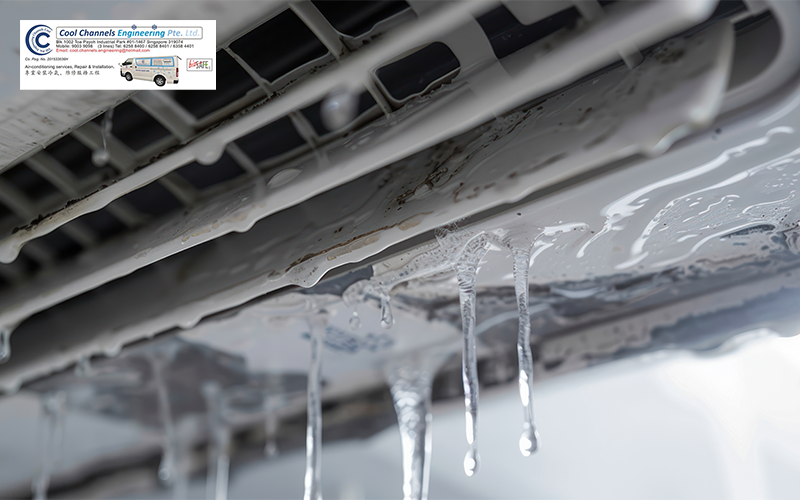
A small amount of condensation is normal, but continuous or heavy leakage is not. When water starts dripping steadily or pooling around the unit, it can seep into walls, ceilings, or flooring, causing visible damage over time. In humid environments like Singapore, this can also create conditions for mould growth, which can affect indoor air quality and become difficult to remove if not addressed early. Moreover, if the water reaches electrical components within or around the unit, this can increase the risk of short-circuits and further system failure.
Electrical issues should always be treated as urgent. If your aircon repeatedly trips the circuit breaker, it may be drawing more power than it should, or there could be a fault in the wiring. This not only affects the performance of the unit but may also point to deeper issues within the system.
A burning smell is another clear warning sign that should not be ignored. It often indicates overheating components or damaged wiring, both of which can pose safety risks if the unit continues running.
Aircon units are designed to run quietly, so any sudden or persistent noise is usually a sign that something is wrong. Sounds such as banging, grinding, or loud buzzing often point to internal components that are loose, worn out, or failing.
Continuing to operate the unit in this condition can worsen the damage, as affected parts may strain other components within the system. What might start as a minor issue can quickly turn into a more complex repair.
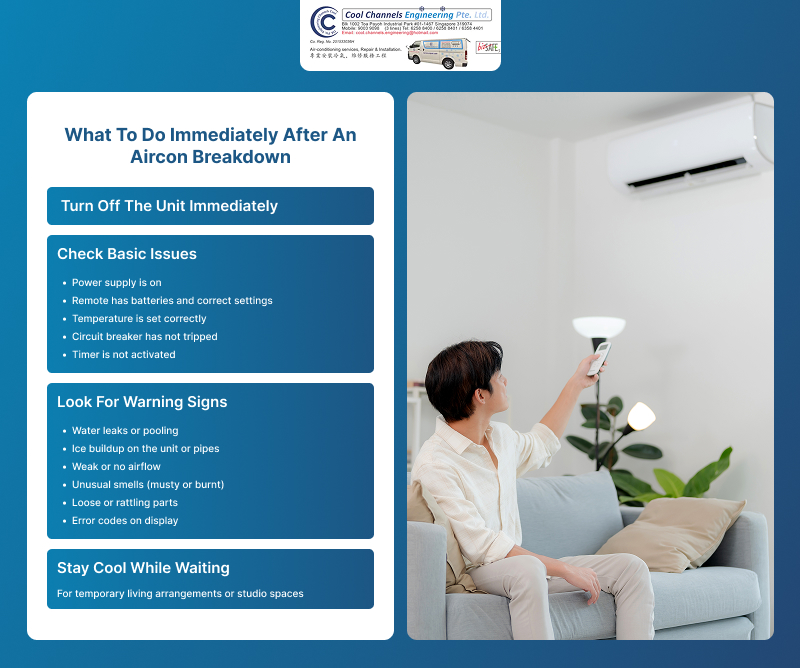
When your aircon stops working, taking a few simple and structured steps first can prevent further complications and make emergency aircon repair more straightforward.
The first step is to switch off the aircon if it is not functioning properly. This is especially important if you notice unusual sounds, burning smells, or electrical issues. Leaving the unit running in these conditions can place additional strain on already compromised components.
By turning it off early, you reduce the risk of further damage and create a safer environment while waiting for help. This also ensures that when emergency aircon repair is carried out, the issue has not worsened unnecessarily.
Before assuming that the problem is serious, it helps to rule out simple causes. Try these quick checks:
Simple aircon troubleshooting can sometimes resolve the emergency without needing immediate intervention. Even if the problem turns out to be more complex, going through these checks helps you better understand the situation. It also allows you to provide clearer information when arranging for emergency aircon repair services.
Take a moment to inspect the unit and the surrounding area. Look out for:
These visible indicators often provide useful clues about what might have gone wrong. When you are able to describe these signs clearly, technicians can prepare more effectively before arriving. This helps make emergency aircon repair faster and more efficient, reducing the amount of time your home remains without cooling.
While waiting for repairs, you can take steps to stay as comfortable as possible without a working air conditioner. Open your windows to let fresh air in, especially if there is a breeze. Switch on standing or ceiling fans to keep air moving, and position them near windows to improve airflow across the room.
If the heat is building up indoors, try to reduce it where you can. Close curtains or blinds to block direct sunlight, turn off heat-generating appliances, and move to a cooler part of your home if needed. These simple steps help you manage the heat while you wait for emergency aircon repair, especially during the warmest parts of the day.
In Singapore, emergency aircon repair typically costs more than standard servicing due to the urgency and faster response required. However, the exact pricing may vary due to several factors, such as:
Repairs requested outside of normal working hours often come with higher fees. Late-night calls, weekend requests, and public holiday servicing usually involve additional charges due to the need for immediate response. If you require emergency aircon repair during these periods, the higher cost reflects the faster turnaround and availability of technicians at short notice.
The complexity of the problem plays a major role in determining cost. Minor issues such as basic cleaning or small adjustments may still be relatively affordable. However, faults involving major components, gas top-ups, or parts replacement will increase the total cost. The more extensive the repair work required, the higher the cost, especially if multiple issues are involved.
The cost of emergency aircon repair can also depend on whether the contractor covers your area and how quickly they are able to respond. Some providers may charge more for urgent call-outs to locations that are further away, while others may not offer aircon repair services in certain parts of Singapore at all.
This is why response time and availability can vary between providers. When arranging emergency aircon repair, it helps to check whether the contractor serves your location, whether there are additional transport or call-out charges, and how soon a technician can be sent down.
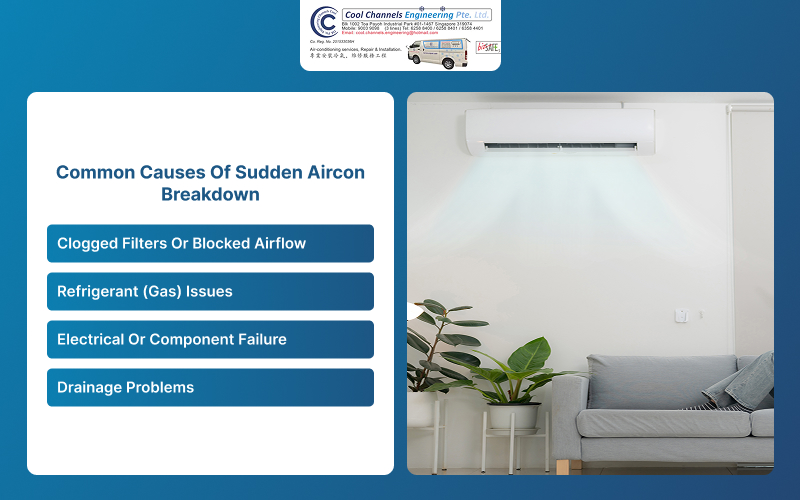
In many cases, aircon breakdowns do not happen suddenly. They often build up over time due to wear and tear, lack of maintenance, or underlying faults that go unnoticed. Understanding these common causes can help you identify issues earlier and respond more effectively when problems arise.
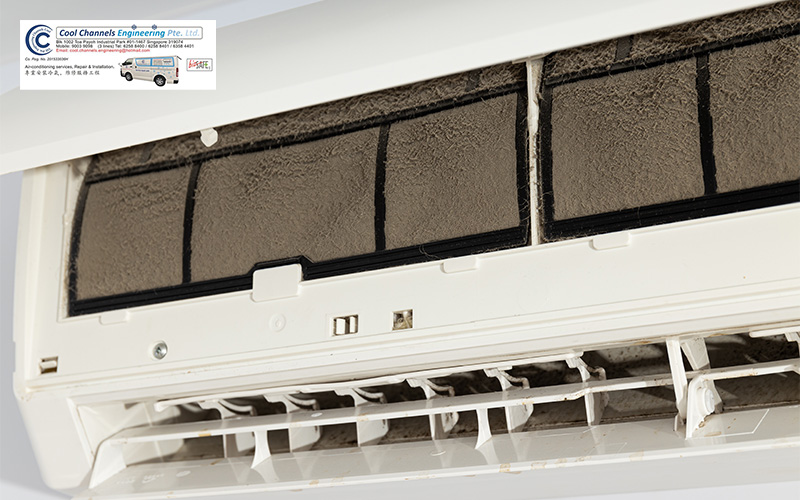
Dust, dirt, and debris naturally build up in your aircon over time, especially in Singapore, where units are used frequently. This can clog the filters and internal components, restricting airflow and forcing the system to work harder to cool the room. Over time, the unit may start to overheat, struggle to maintain the set temperature, or even shut down automatically to prevent damage.
Refrigerant is what enables your aircon to remove heat from the room. When levels drop due to leaks or gradual depletion, the system becomes less effective at cooling. You may start to notice warm air blowing out or uneven cooling across different parts of the room.
If the issue is not addressed, the unit may eventually shut down to protect its internal components. Refrigerant problems cannot be fixed through basic checks and require proper handling by trained technicians.
Aircon systems rely on several electrical parts working together, including capacitors, circuit boards, internal wiring, and the aircon condenser. Over time, these components can wear out or become damaged due to power fluctuations, prolonged usage, or exposure to outdoor conditions.
When one part fails, it can affect the entire system, leading to sudden shutdowns or irregular operation. Electrical issues are often unpredictable and may present as tripping, failure to start, or intermittent cooling. In these cases, professional troubleshooting and urgent aircon repair services are needed to safely identify and replace the faulty components.
As your aircon cools the air, it also removes moisture, which is directed out through drainage pipes. Over time, these pipes can become clogged with dirt, dust, or algae buildup, especially in Singapore’s humid conditions. When this happens, water may back up into the unit, leading to leaks or triggering safety shutdowns. If left unresolved, the excess moisture can damage surrounding walls, ceilings, or flooring and may also affect internal components within the unit.
While not all breakdowns can be avoided, taking preventive steps goes a long way in reducing the chances of sudden failures and the need for emergency aircon repair.
Routine aircon maintenance keeps your aircon running smoothly by ensuring that filters, coils, and internal components remain clean. By removing dirt and debris regularly, you improve airflow, reduce strain on the system, and help it cool your home more efficiently.
As a general guide, most households in Singapore should schedule aircon servicing every 3 to 4 months, especially if the unit is used daily. For heavier usage, such as running the aircon for long hours or overnight, more frequent servicing may be needed.
Beyond regular servicing, a chemical wash or overhaul may be required when there is significant buildup within the unit or when performance has noticeably declined. These deeper cleaning services help remove stubborn dirt and restore cooling efficiency, especially for older or heavily used systems.
How you use your aircon has a direct impact on its lifespan. Setting extremely low temperatures or running the unit continuously without breaks can put unnecessary strain on the system, especially during hot periods.
To reduce wear and keep your unit running efficiently, follow these simple tips:
Using moderate settings and giving the unit time to rest helps reduce stress on internal components. These simple habits improve efficiency and reduce the chances of sudden failure.
Response time depends on the contractor and the time of the request. Some providers can attend within a few hours, while others may take longer during peak periods or after-hours. If you require emergency aircon repair, it is best to check your contractor’s availability and estimated arrival time upfront.
Yes, emergency aircon repair typically costs more than standard servicing. This is due to the urgency, faster response time, and possible after-hours charges. The final cost will also depend on the type and severity of the issue.
It is not advisable. If your unit is leaking, especially heavily, continuing to use it may worsen the problem or lead to water damage and electrical risks. It is safer to switch off the unit and arrange for emergency aircon repair services.
This depends on the age of your unit and the extent of the issue. If repairs are minor and the unit is relatively new, repair is usually the better option. However, if the system is older and requires frequent repairs, replacement may be more cost-effective in the long run.
A sudden aircon failure can be frustrating, but knowing how to respond helps you stay in control. From identifying warning signs to taking the right immediate steps, a clear approach allows you to minimise damage and restore comfort as quickly as possible. More importantly, regular servicing and proper usage can go a long way in preventing situations that require emergency aircon repair.
If your unit has stopped working or is showing signs of a serious issue, it is best to have it checked as soon as possible. At Cool Channels Engineering, our experienced technicians provide prompt and reliable support for residential and commercial aircon systems in Singapore, helping you get your system back up and running with minimal disruption.
Contact the team today to schedule a check or arrange immediate assistance.