Our Operating Hours: Mon – Sat 8:30am – 10pm Sun 8:30am – 5pm

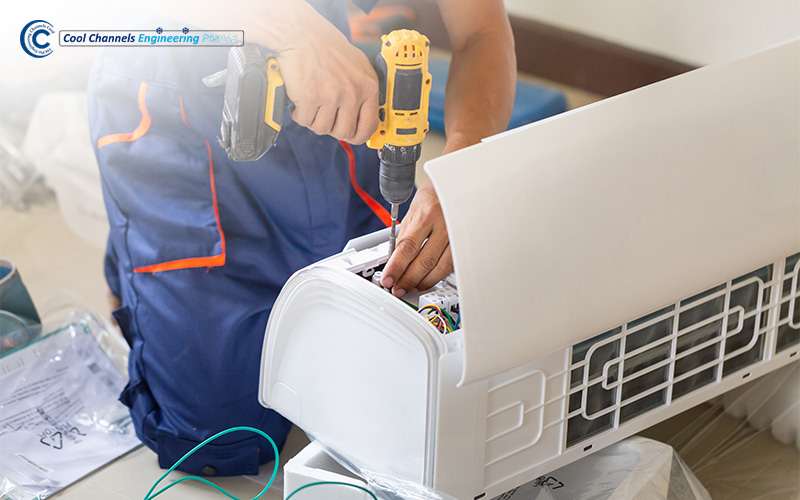
Singapore runs on air conditioning. With temperatures averaging 31 to 34 degrees Celsius year-round and humidity that regularly tops 80 percent, most homes run their aircon 8 to 12 hours a day without pause. At that kind of usage rate, regular aircon maintenance is not optional. It is the most cost-effective way to protect a system that costs between $2,000 and $5,000 to replace.
This guide covers everything: what aircon maintenance actually includes, the four service types, how much each costs in Singapore in 2026, how often to schedule based on your property type, what you can do yourself between visits, and what separates a good maintenance provider from one that wastes your money. Whether you live in a 4-room HDB flat or manage a commercial office, the principles are the same.
Most homeowners only think about their aircon when something goes wrong. By then, the problem has usually been developing for weeks and the cost is already locked in.
Here is what happens inside a unit that is not being serviced properly. Singapore air is humid and full of biological matter. Within three months of a missed service, the evaporator coil starts building up a biofilm, which is a layer of dust, mould spores and bacteria that grows well in the warm, moist interior of a constantly running unit. Research on tropical HVAC systems shows this reduces heat exchange efficiency by 20 to 40 percent, which means the compressor works harder, uses more electricity and wears out faster.
The National Environment Agency (NEA) notes that poorly maintained air conditioning contributes measurably to higher household electricity bills across Singapore, with some HDB households paying an extra $30 to $60 per month from neglected units alone. That is far more than the cost of a routine service. You can read more about efficiency standards at the NEA Minimum Energy Performance Standards page.
A poorly serviced aircon is not just inefficient. The warm, damp interior is a good growing environment for Aspergillus and Cladosporium mould. These get blown into your living space every time the unit runs. In Singapore’s high-density housing, where most flats have limited natural ventilation, this matters. Households with young children, older residents or anyone with asthma or respiratory conditions are particularly at risk. Regular maintenance removes this build-up and keeps the air the unit circulates genuinely clean.
| “My last aircon service contractor asked me to replace the whole set. But these guys found the issue and fixed it in two visits, total less than 1hr. I will recommend this service company to all my friends.” – Yoyu Xioo, Customer |
| “I have been engaging Cool Channels Engineering Pte Ltd for 8 years. It was always a smooth experience and the air con specialists will do whatever is required without upselling. Highly recommended.” – Thomas, Customer for 8 Years |
| “Am very pleased with how thoroughly they cleaned my Aircon units. They are also very considerate to cover the place and the external condenser during cleaning with plastic sheet to minimise dirt flying around. 5 Stars.” – G H, Customer |
| “Thank you for this company always updating us on our next servicing and very clean when come to service. thanks to zing and heng 2026” – Jassica RJ, Contract Customer |
What Is Aircon Maintenance and How Does It Differ from Servicing and Repair
These three terms get used interchangeably but they refer to different things. Here is a plain comparison:
| Aircon Maintenance | Aircon Servicing | Aircon Repair | |
| Purpose | Preventive – find and address issues before they become faults | Routine cleaning to keep performance up | Fix a fault that has already developed |
| Scope | System inspection, electrical checks, component condition assessment, cleaning | Filter clean, fan coil clean, drainage flush, performance test | Diagnose and fix specific faults: leaks, blower, compressor, refrigerant |
| Timing | Scheduled, usually on a contract basis | Every 3 to 6 months, ad-hoc or contract | When a fault occurs |
| Best for | Owners who want proactive year-round care | All aircon users as a baseline | When something has already gone wrong |
For most Singapore households that run their aircon daily, a professional aircon maintenance contract is the most cost-effective option. You pay a fixed annual rate, we handle the scheduling and you get issues caught before they turn into repairs.
The right type of maintenance depends on how long since your last service, what condition the unit is in and how heavily it gets used.
Standard servicing is the minimum maintenance every Singapore aircon needs. A proper general service takes 30 to 45 minutes per unit and includes the following:
A chemical wash goes well beyond what a standard service can do. The technician partially dismantles the indoor unit to reach the evaporator coil, fan blower and drainage tray, then applies a specialised chemical solution that breaks down biofilm, mineral deposits and built-up dirt that a routine clean cannot touch.
This process restores cooling efficiency close to what the unit had when new. It also removes the microbial build-up that causes the musty or stale smell many Singapore homeowners notice when they first switch the aircon on. Standard servicing alone will not clear this.
A chemical wash makes sense when:
Singapore context: BTO handovers and HDB estate upgrading mean many households are living near active renovation works at any given time. Construction dust is much finer than normal household dust, gets deeper into fan coils and drainage, and needs chemical treatment to clear. |
See more about our aircon chemical wash and overhaul service.
A chemical overhaul is the most thorough option available and is reserved for units that are badly neglected or where a chemical wash alone has not fixed the problem. It involves a complete disassembly of the indoor unit, individual chemical cleaning of every component, replacement of worn gaskets and seals, and a detailed check of the compressor and expansion valve.
The process takes 90 to 120 minutes per unit. For a 5 to 7-year-old system that has lost a lot of performance, a proper overhaul can often bring it back to 85 to 90 percent of its original efficiency. That avoids the $2,800 to $5,000 cost of a full system replacement.
An overhaul is the right call when:
The outdoor condensing unit gets overlooked in most residential maintenance routines because it is out of sight on the aircon ledge or roof. In Singapore, particularly in HDB flats near construction sites, tree-lined corridors or busy roads, the condenser coil fins and fan collect dust and debris that blocks airflow and reduces how well the unit sheds heat.
When the condenser cannot breathe properly, the compressor runs at higher pressure and temperature, which speeds up wear and pushes electricity consumption up. Condenser maintenance should be included in or rotated with your indoor unit schedule.
Our condenser service package covers full cleaning and inspection of the outdoor unit.
These are the current Cool Channels rates for 2026. All prices include GST.
| Service Type | Price (SGD) | Time Per Unit | Recommended Frequency |
| Standard General Service | From $45 per unit | 30 to 45 min | Every 3 to 4 months |
| Chemical Wash | From $120 per unit | 60 to 90 min | Every 12 to 18 months |
| Chemical Overhaul | From $180 per unit | 90 to 120 min | Every 2 to 3 years or as needed |
| Annual Maintenance Contract | From $120 per year | Scheduled visits | For daily-use residential units |
| Aircon Repair (fault-based) | From $70 per issue | Varies by fault | As needed |
Multi-unit and package pricing is available. See our current aircon service packages and promotions for full details.
Maintenance needs vary by property type. Here is what to pay attention to depending on where you live.
Most HDB flats use wall-mounted split systems in System 2, 3 or 4 configurations with one outdoor unit serving multiple indoor units. A few practical points for HDB owners:
Condo units often use ceiling cassette or ceiling concealed systems. These require a different maintenance approach because components are accessed from below through a ceiling panel, and drainage is typically pump-fed rather than gravity-fed. If the condensate pump fails, water collects in the ceiling void before eventually leaking through. Ceiling repairs are expensive. A maintenance visit that includes a pump function check is essential for any condo unit with a cassette system.
Landed homes typically run System 4 or System 5 configurations with multiple outdoor units serving different floors or zones. More units and longer piping runs mean more places where a refrigerant leak or drainage blockage can develop. Quarterly maintenance visits are strongly recommended for landed properties where the aircon runs daily.
Professional maintenance handles the deep work. Between scheduled visits, a few simple habits keep the unit running well and reduce the chance of a blockage developing into a problem.
Some well-intentioned DIY attempts cause more damage than skipping the maintenance altogether. Avoid the following.
The right frequency depends on how often you use the unit and what your environment is like.
|
Usage Pattern |
Standard Service |
Chemical Wash |
Notes |
|
Light use – a few times a week |
Every 6 to 12 months |
Every 2 years |
Minimum baseline |
|
Regular use – daily evenings |
Every 4 to 6 months |
Every 18 months |
Most Singapore households |
|
Heavy use – daily 8 or more hours |
Every 2 to 3 months |
Every 12 months |
Work-from-home or full-day use |
|
Homes with pets or near construction |
Every 2 to 3 months |
Every 12 months |
Pet hair and construction dust block drainage quickly |
|
Post-renovation |
Immediately after works |
At first post-reno service |
Service before returning to normal use |
|
Commercial or office spaces |
Monthly or every 2 months |
Every 6 to 12 months |
Regulatory standards may apply for F&B and healthcare |
Singapore timing tip: Book a thorough service in October before the Northeast Monsoon (November to January). The higher humidity during monsoon season speeds up mould build-up inside units. A service in February or March also makes sense to prepare for the hot inter-monsoon period from March to May. |
Both options work depending on your situation. Here is how to decide.
|
Annual Maintenance Contract |
Ad-Hoc Booking |
|
|
Cost |
Fixed annual rate, typically 10 to 25 percent cheaper per visit than booking ad-hoc |
Standard per-visit rate, no ongoing commitment |
|
Scheduling |
We handle it and send reminders. Nothing for you to track |
You book each visit yourself |
|
Priority |
Contract clients get scheduling priority |
Subject to availability at time of booking |
|
Best for |
Households and businesses using their aircon daily |
Holiday homes or investment properties with occasional use |
|
Consistency |
Same service scope and technician familiarity built over time |
Can vary between visits |
Cool Channels annual maintenance contracts start from $120 per year for residential units. View our maintenance plans to see what is included.
Commercial air conditioning systems work harder than residential ones. Offices, retail shops, F&B outlets and industrial facilities typically run their systems 10 to 14 hours a day with higher occupancy, more heat-generating equipment and more frequent door openings. A system that fails during a busy lunch service, a weekend sale, or a client presentation causes real disruption and has a direct cost.
Cool Channels Engineering provides commercial aircon maintenance contracts across Singapore, covering:
We can schedule visits early in the morning or on weekends to avoid disrupting your operations. Every commercial maintenance visit includes a written service report for your facilities records.
Contact us for a commercial maintenance quotation tailored to your property and system type.
There are hundreds of providers in Singapore and the quality gap between them is real. Here is what actually matters when comparing options.
A provider that stands behind their work will offer a written warranty. For maintenance visits, look for at least 30 days. For repairs, 90 days. Any company that cannot offer a warranty period is telling you something about their own confidence in their service.
You should receive a clear price before the technician does anything. If the quote you get on the phone does not match what you are charged at the end, do not rebook.
Ask the company what their service includes before you confirm a booking. A proper maintenance visit takes at least 30 minutes per unit. If a technician is done in 12 to 15 minutes, the drainage has not been flushed and the refrigerant pressure has not been checked. Those two steps matter.
Make sure the company services your specific brand. Daikin, Mitsubishi Electric, Panasonic, Samsung, LG, Fujitsu, Hitachi and Toshiba each have different component layouts and access methods. A technician who does not know your brand well will miss things.
A high rating from a small number of reviews is not reliable. Look for a consistent pattern across hundreds of verified Google reviews. Read the negative reviews too and check how the company responds. That tells you more than the average score.
A cooling failure in Singapore is not a Monday-to-Friday problem. Check that your provider operates on evenings and weekends and can take urgent bookings when needed.
For over 25 years, Cool Channels Engineering has been a trusted aircon contractor in air conditioning maintenance, servicing, repair, and installation across Singapore. Our team of skilled technicians serves both residential and commercial clients island-wide—from the northern hubs of Woodlands and Yishun, through the eastern heartlands of Tampines and Bedok, across to Jurong and Clementi in the west, and throughout the central districts of Toa Payoh, Bishan, and Novena. We are committed to delivering reliable, high-quality cooling solutions to every corner of the city.
Every maintenance visit includes a structured service checklist. All work comes with a 90-day workmanship warranty. If the same issue comes back within 90 days of our visit, we return at no extra charge.
Book your aircon maintenance service with Cool Channels.
A proper maintenance visit covers air filter washing, fan coil unit cleaning, evaporator coil inspection, drainage pipe flushing, drainage tray cleaning, electrical connection check and tightening, refrigerant pressure check, thermostat calibration and a cooling performance test before and after. The whole process should take at least 30 to 45 minutes per unit.
Standard general servicing with Cool Channels starts from $45 per unit. Annual maintenance contracts start from $120 per year. Chemical wash starts from $120 per unit. All prices include GST. See our service packages page for the full breakdown.
For most Singapore households with daily aircon use, every 3 to 4 months is the right standard. Units running 8 or more hours a day should be serviced every 2 to 3 months. The NEA recommends regular maintenance to preserve energy efficiency ratings and avoid excess electricity use.
A chemical wash partially takes apart the indoor unit and uses a chemical solution to clean the accessible components. This is recommended every 12 to 18 months. A chemical overhaul fully disassembles the unit and cleans every component individually. It is for units where a chemical wash has not resolved the problem or where the unit has been badly neglected. An overhaul takes 90 to 120 minutes per unit compared to 60 to 90 minutes for a wash.
If the problem developed gradually over weeks, such as weaker cooling, a mild smell or less airflow, it is most likely a maintenance issue. If it appeared suddenly, such as the unit stopping, a loud mechanical sound, water leaking from an unusual spot or an error code on the display, that points to a repair. See our aircon repair services if you need a fault diagnosed.
Yes, and this is the main reason to keep to a schedule rather than waiting for problems. Most common Singapore aircon faults – water leaks from blocked drainage, weak cooling from biofilm on the coil and strange noises from debris in the blower – are either caused directly or made much worse by skipped services. Catching these early during a maintenance visit costs a fraction of what a repair job costs.
Yes. Cool Channels Engineering provides commercial aircon maintenance contracts for offices, retail outlets, F&B establishments and industrial facilities across Singapore. We cover VRF and VRV systems, cassette units, ducted systems and split systems.
Cool Channels Engineering Pte Ltd – Professional Aircon Maintenance, Servicing, Repair and Installation | Serving Singapore Since 1999
Share this blog:
Stay updated with the latest tips, industry trends, and company updates to keep your air conditioning systems performing at their best.
A blinking light or unfamiliar code means your Samsung aircon has detected an unusual operating condition. Depending on the model, the code may appear on the indoor unit display or through a pattern of flashing indicator lights. This Samsung aircon troubleshooting guide explains what common codes may indicate, which checks you can perform safely, and […]
A blinking timer light or unfamiliar code usually means your Panasonic aircon has detected an abnormal operating condition. The code can help narrow the problem down to communication, sensors, drainage, fans, refrigerant circulation, or electrical components. This Panasonic aircon troubleshooting guide explains how to retrieve an error code, understand common H-series and F-series faults, perform […]
A blinking light or unfamiliar code can make it difficult to tell whether your Mitsubishi aircon needs a reset or professional attention. Error indicators help narrow down the affected component, but their meanings can vary by model and product series. This Mitsubishi aircon troubleshooting guide covers common Mitsubishi Electric error codes, blinking-light patterns, and checks […]
Cool Channels Engineering
Typically replies within minutes
Need help with aircon installation or servicing?
需要空调安装或维修?
Online | Privacy policy
WhatsApp us

