0
0

It always seems to happen on the hottest day: your aircon suddenly stops working, and the cool comfort you rely on disappears. While it’s tempting to assume the worst, most issues can be traced to simple causes like power interruptions, dirty filters, or minor setting errors. Before reaching for the phone, try these quick steps to find out why your air conditioner is not working.
Sometimes, the simplest explanation is the right one. If your aircon is not turning on, start by checking the power supply. Make sure the unit is securely plugged in and the wall switch is turned on. If that looks fine, inspect your home’s circuit breaker, as power surges or faults can cause the air conditioner’s circuit to trip.
Alternatively, an unresponsive aircon may be caused by weak or dead batteries in your remote control. Replace the batteries and check if the display on the remote lights up. If it still doesn’t work, try resetting the remote or using a universal controller if available.
If your aircon stops working or is blowing weak, warm air, dirty filters could be to blame. Over time, dust and debris build up inside your unit, restricting airflow and causing the system to overheat or shut down automatically as a safety measure.
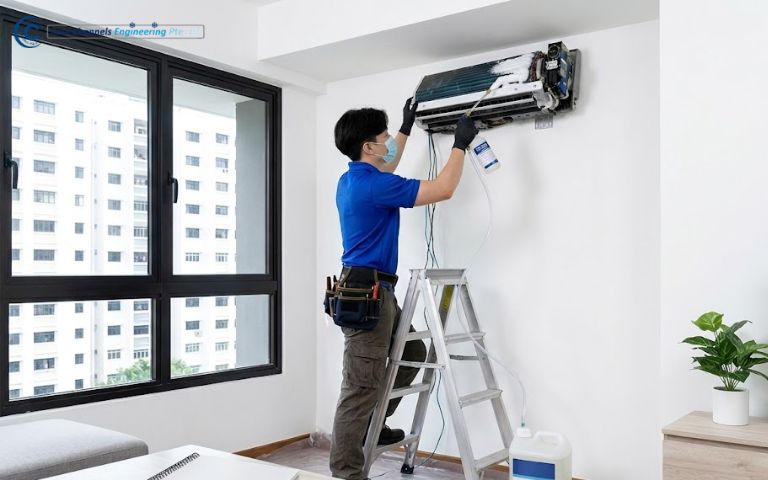
Remove and inspect the filters. If they appear dusty or grey, give them a thorough wash and let them dry completely before reinstalling. Ideally, filters should be cleaned once a month, especially in Singapore’s humid environment, where dust and mould accumulate faster. This is one of the simplest yet most important steps in aircon maintenance, helping your system run efficiently and last longer.

Before assuming your air conditioner is not working, double-check the thermostat or remote settings. Make sure the mode is set to “Cool” and not “Fan” or “Dry”. You should also ensure that the set temperature is lower than the room’s current temperature.
If the thermostat sensor is malfunctioning or misplaced, it may prevent the compressor from activating. Try adjusting the settings or turning the system off and on again after a few minutes. If this doesn’t help, a service inspection may be needed to calibrate or replace the sensor.
Modern aircon systems are designed to self-diagnose issues. If your air conditioner is not working, check the indoor unit for any blinking lights or error codes displayed on the panel.
Each pattern or code typically corresponds to a specific issue, ranging from low refrigerant levels to compressor faults. For example, when troubleshooting an aircon compressor, certain blinking sequences can indicate overheating or circuit issues.
You can also refer to your brand’s manual for interpretation. For Panasonic aircon troubleshooting, specific error codes are often listed in the user guide or available online through Panasonic’s support site. These codes can help identify whether the issue stems from the compressor, sensor, or electrical components. If you’re unsure how to proceed, it’s best to stop using the unit and call a licensed technician to prevent further damage.
While these DIY steps can solve many common issues, some complex problems, like refrigerant leaks, electrical component failure, or a genuinely faulty compressor, require the specialised tools and expertise of a technician. If your air conditioner is still not working after completing these checks, it’s time to call in the professionals.
At Cool Channels Engineering, we specialise in diagnosing and resolving all types of aircon problems at home. With over 15 years of experience and a commitment to reliable service, we ensure your system is restored quickly and efficiently, so you can enjoy lasting cool comfort.
Need a fix fast? Book an inspection with us today!