0
0

If your air conditioner has not been cooling properly, or you’ve been noticing weaker airflow, it could point to an aircon gas leak. Inside every air conditioning system is refrigerant, which is a cooling agent that absorbs heat from the air and releases it outdoors. Essentially, it’s what allows your unit to produce cool air. When it escapes, your system has to work harder to maintain temperature, which leads to higher energy bills, uneven cooling, and potential damage to the compressor.
In this article, we explore what exactly causes these leaks and how you can save your unit from costly repairs down the line.
Copper pipes transport refrigerant from the indoor unit to the outdoor system. Over time, exposure to moisture, oxidation, and general wear can cause corrosion, leading to tiny pinhole leaks. In older air conditioners, this is one of the most common causes of a gas leak, especially in humid environments like Singapore.
Even the best air conditioner can fail if installed incorrectly. Loose joints, poor brazing, or sharp bends in refrigerant lines can gradually cause cracks and leaks. That is why it’s important to hire technicians who are properly trained and experienced in handling refrigerant piping. This ensures that your system is fitted securely and pressure-tested for long-term reliability.
Air conditioning systems operate under constant vibration. Over years of daily use, these vibrations can loosen joints or stress copper lines, leading to leaks around connectors or valves. Routine inspection helps detect these weak points early before they result in a full-blown gas leak.
While rare, some leaks may be caused by manufacturing flaws in coils or valves. Repeated thermal expansion and contraction can also cause materials to weaken over time. If your unit is relatively new but still losing refrigerant, a professional technician can inspect it for defects and recommend the appropriate solution.
The fan coil unit inside your home can sometimes develop leaks from corrosion, physical wear, or poor drainage. When the coil surface deteriorates over time, small openings may form, allowing refrigerant to escape gradually and reducing your air conditioner’s overall cooling efficiency.
Located outdoors, the condenser unit faces constant exposure to weather, dust, and vibration. Metal fatigue, physical damage, or corrosion in the condenser coil can lead to refrigerant loss. Regular cleaning and inspections can help protect these components and maintain steady cooling performance.
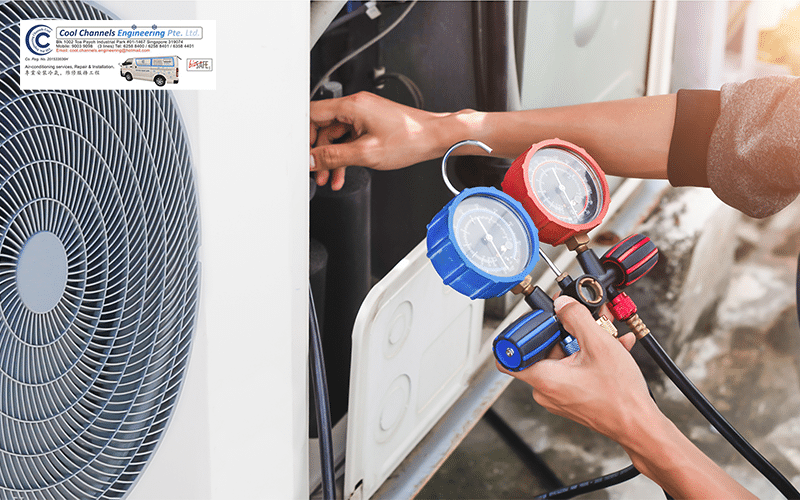
Weak cooling, hissing sounds, or visible frost are key symptoms of an aircon gas leak. A qualified technician can perform pressure tests and use specialised detection tools to confirm whether refrigerant is escaping and where the leak is located.
The most effective way to prevent an aircon gas leak is through consistent, professional servicing. With regular aircon maintenance in Singapore, technicians can monitor refrigerant levels, inspect copper lines for corrosion, and check pipe insulation. Early detection allows them to correct pressure imbalances, reinforce weak joints, and keep your cooling system performing efficiently for longer.
When leaks become frequent or severe, topping up refrigerant is only a temporary fix. In such cases, your technician may recommend replacing damaged pipes, coils, or valves—or even reinstalling the unit if the system is ageing. Signing up for an aircon servicing contract ensures your system receives regular care and timely repairs before issues escalate.
When it comes to keeping your cooling system reliable, prevention is always better than cure. A well-maintained air conditioner not only performs more efficiently but also helps you avoid expensive repairs associated with an aircon gas leak.
Cool Channels Engineering provides expert servicing, troubleshooting, and installation for homes, offices, and commercial properties across Singapore. As one of the best aircon installers in Singapore, our technicians are trained to handle refrigerants safely and ensure your system runs efficiently for lasting comfort.